Oshawa’s 1926 Parks: An October 17 Archive Snapshot
Durham Time Machine — October 17, 1926 ↔ October 17, 2026
October 17, 1926 was a Sunday. This is a sourced reconstruction / archive snapshot, not a report of a picnic, race, memorial gathering or Parks Commission decision on that particular day. The exact-year Ontario Reformer run was checked through Durham Region Newspapers / VITA, but the normal public route returned an access-control challenge. No control was bypassed. This edition instead draws on the City of Oshawa Directory, published May 1, 1926 and digitized by Oshawa Public Libraries.
That boundary matters. An annual directory can tell us how its publisher described public spaces and the civic ambitions attached to them. It cannot prove that a park was open, that a crowd gathered, that a race was run or that any particular event happened on October 17. Read as a period document, though, its introductory pages make parks a notable part of the city’s self-portrait: shoreline recreation, a northern sports ground, a central war memorial and smaller playgrounds under municipal oversight.
A lakefront park in the city’s description
The directory described Lakeview Park as a 65-acre picnic and recreation place on the shore of Lake Ontario. The acreage, purpose and setting are all facts about what the 1926 directory printed. They are not a survey, attendance count or proof that all 65 acres were used in the same way. Nor do they establish a program or a visitor’s experience on the October date.
Even so, the entry is useful because it places outdoor recreation at the waterfront in the book’s picture of Oshawa. The directory did not merely list an address; it called out the lake shore and framed the park as a destination for picnics and recreation. That language is period boosterism as well as description. It should be understood as the directory publisher’s claim about the park’s appeal, rather than as an independently measured quality rating.
Alexandra Park and a northern sports ground
The same civic description placed Alexandra Park on a hill at the north end of the city. It said the park had a race track, sports area and grandstand. Those three features give a more specific sense of the kinds of public recreation the directory chose to emphasize. They do not, however, establish a schedule, a particular sport, a crowd size, admission charge, race result or the condition of the grounds on October 17.
This is a helpful reminder that a printed civic overview is neither an event calendar nor an architectural inventory. It records the features the publisher thought belonged in Oshawa’s public-facing profile. A reader can responsibly say that the 1926 directory presented Alexandra Park as a northern sports venue with a grandstand. A reader cannot responsibly turn that line into a claim that an event occurred there on a named Sunday without a dated program, newspaper report or other contemporaneous evidence.
The central memorial as a civic claim
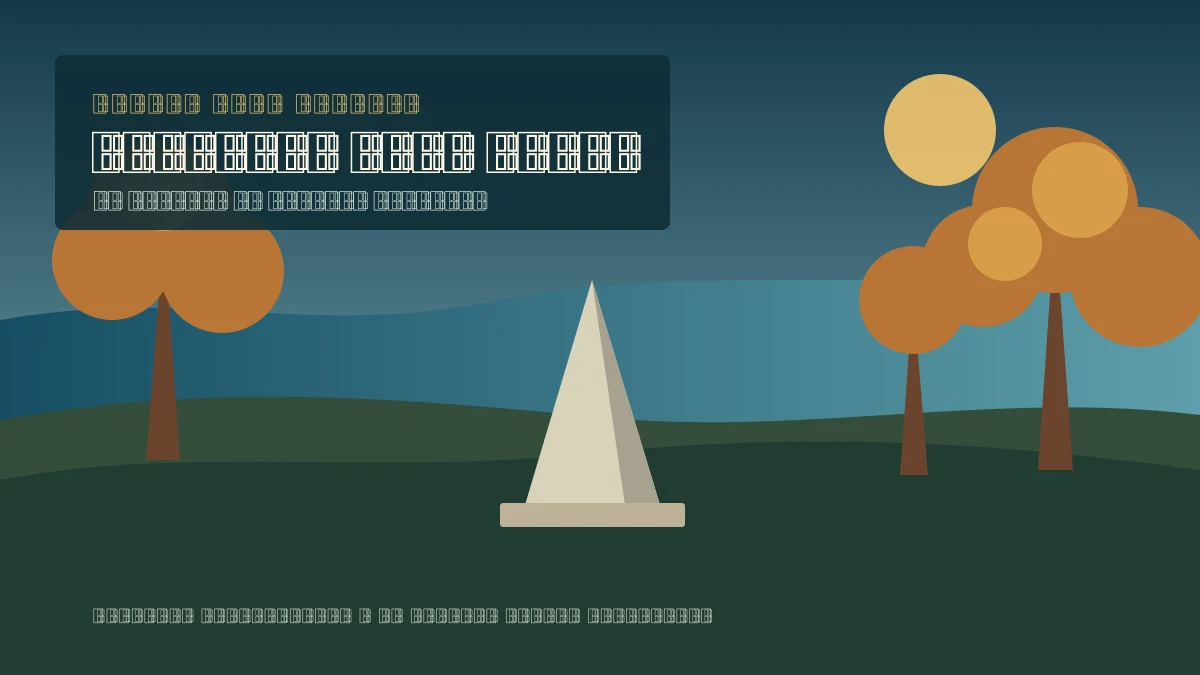
In the centre of Oshawa, the directory called Central Memorial Park new and described a war memorial located there. It characterized the memorial as one of the finest in Canada and said it had cost more than $27,000, voluntarily subscribed by local people. The superlative is promotional language, and the cost and subscription statement are period claims, not figures independently audited for this article.
The distinction does not make the passage useless. It tells us that the directory connected a central park, remembrance and voluntary civic fundraising in its account of the city. But it cannot establish the date of the memorial’s completion, the identities of subscribers, the total ultimately spent, a ceremony, or how residents understood the memorial on October 17. Those require more specific records.
Small parks, public responsibility
Beyond the three named parks, the directory said smaller parks and playgrounds were under the supervision of the City Parks Commission. That is the fourth element of its public-space map: not just major destination parks, but a municipal framework for smaller recreation areas. The statement supports a limited conclusion about how the directory described oversight. It does not identify every playground, give a commission roster, confirm a budget, or prove that a particular area was maintained on a given day.
Taken together, at least five local facts can be verified in the 1926 directory: Lakeview Park was described as 65 acres; it was placed on Lake Ontario’s shore; Alexandra Park was placed at the city’s north end and credited with a race track, sports area and grandstand; Central Memorial Park was described as new and centrally located with a war memorial; and smaller parks and playgrounds were said to be under City Parks Commission supervision. The directory’s additional statement that the memorial cost more than $27,000 from voluntary subscriptions is retained as an attributed period claim, not a modern calculation.
For present-day context, the City of Oshawa provides current municipal information, including its parks and recreation services, while Oshawa Public Libraries explains its local-history resources. Those current sources are useful starting points, not evidence that a 1926 park boundary, sports facility, governing body or memorial description is unchanged. We have not verified a direct present-day identity, boundary or successor for every historic feature named in the directory.
Reading an archive snapshot honestly
The 1926 directory offers a compact civic image rather than a diary. Its treatment of parks joined the lake shore, organized sport, memorial culture and local administration in a few carefully selected paragraphs. That selection is historically interesting in its own right: public space was part of how the city wished to be presented to readers and prospective residents.
It is also why the source’s limits need to stay visible. The book was published May 1, months before the October date represented here. It cannot show whether Lakeview Park hosted a picnic, whether Alexandra Park’s track was in use, whether the memorial drew visitors, or whether the Parks Commission met on October 17. An exact-date newspaper, meeting minute or program would be needed for that.
- 1926 City of Oshawa Directory, Henry Vernon & Son, published May 1, 1926; verified against its “Parks and Playgrounds” introduction. Digitized by Oshawa Public Libraries.
- Oshawa Public Libraries — Oshawa city directories.
- Oshawa Public Libraries — Local History & Genealogy.
- City of Oshawa, current municipal-information source only.
- Durham Region Newspapers / VITA, checked for date-specific research; access control was not bypassed.
Source note: This is original editorial work and a sourced reconstruction of a 1926 directory’s parks description. The annual directory cannot establish a park visit, event, race, meeting, ceremony, boundary, operating condition or business activity on October 17. The memorial cost and voluntary-subscription statement are reported as period claims. No archive scan, photograph, advertisement, source headline or protected wording has been reproduced.
Until such a source can be consulted without bypassing archive controls, this remains an archive snapshot: original reporting based on a clearly identified 1926 directory, with its factual listings separated from promotional claims and from events the document cannot establish.